News AI Models
Thinking Machines Inkling 2 Mini Open-Weights Looped Transformer Model Released for Laptop Use
Thinking Machines Lab released the Inkling 2 Mini open-weights model on November 20, 2026, a 26.4 billion parameter looped transformer designed for local laptop inference.
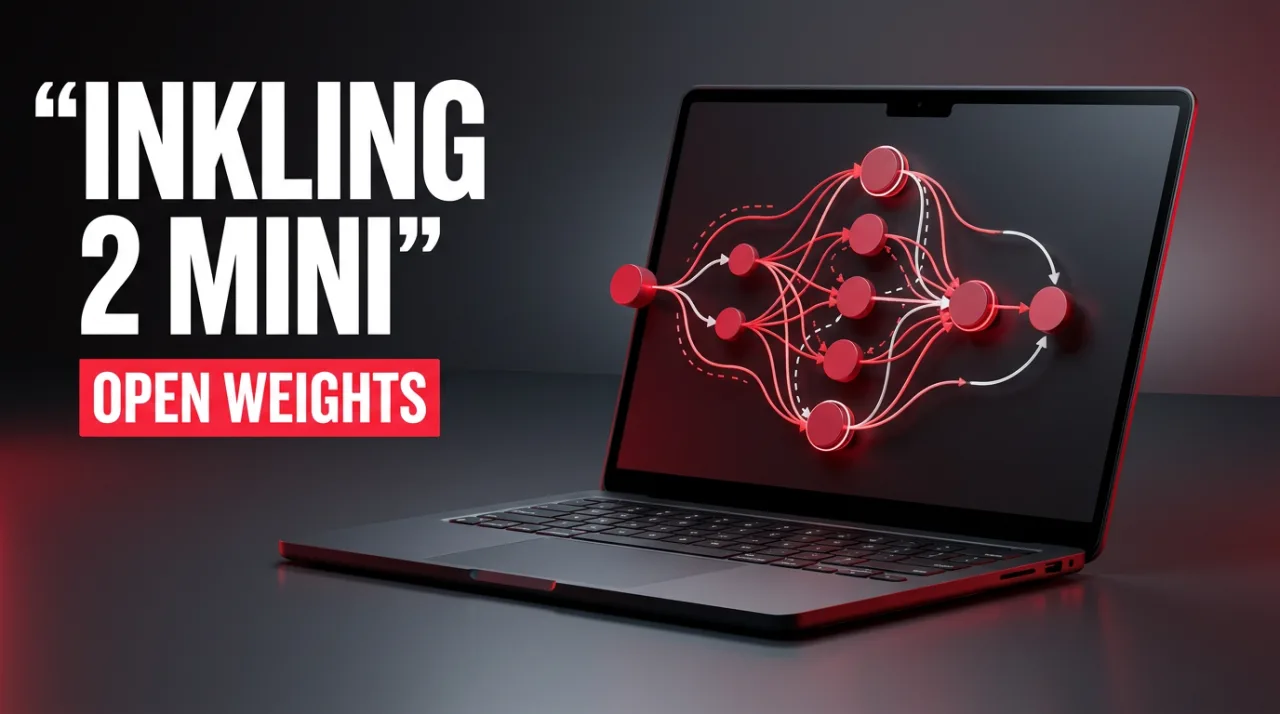
Thinking Machines Lab released the Inkling 2 Mini open-weights model on November 20, 2026. The multimodal decoder-only transformer accepts text and image inputs and produces text outputs while running on standard laptop hardware.
Thinking Machines Inkling 2 Mini Architecture and Technical Specifications
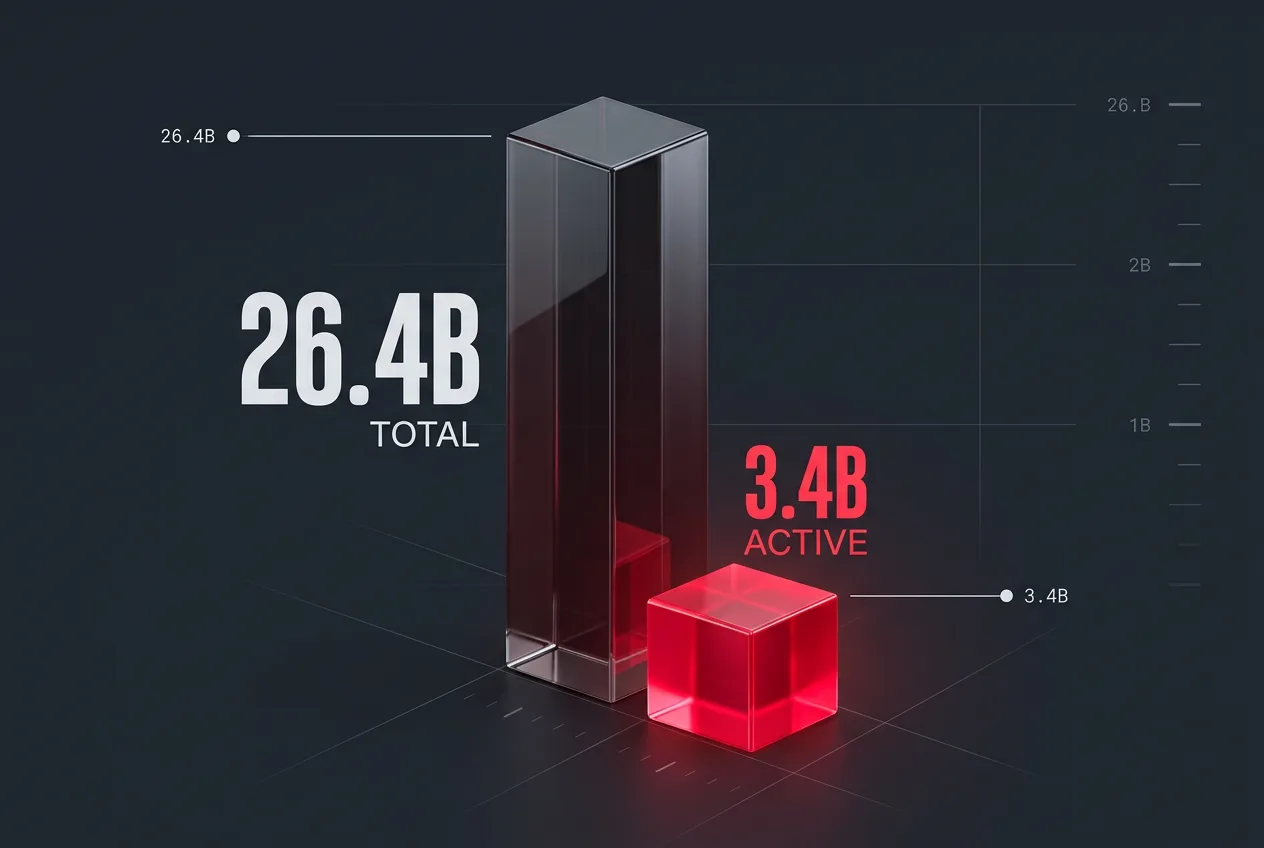
The model uses a 24-layer decoder-only transformer with sparse mixture-of-experts layers. Each layer contains 128 experts and routes 8 per token, yielding 26.4 billion total parameters and 3.4 billion active parameters per token. The middle 12 layers are looped three times with shared weights, producing 48 effective layer applications per token and an effective active parameter count of roughly 5.4 billion. The architecture incorporates hybrid local and global attention, native NVFP4 quantization for most weights, and MXFP8 for the final layers, resulting in a 20 GB checkpoint that supports up to one million tokens of context.
Weights are released under Apache 2.0 with an acceptable use policy. GGUF quantized versions are available through Unsloth and llama.cpp. The model runs on Apple silicon Macs with at least 32 GB of unified memory via Ollama, on NVIDIA DGX Spark systems, and on GPUs with 32 GB or more VRAM. Hosted inference and fine-tuning are offered through the Tinker platform.
Thinking Machines Lab also released a variable-loop research variant alongside the main checkpoint. The company states that the looped design increases internal reasoning steps per token while keeping chain-of-thought traces monitorable, which it says improves performance on agentic and tool-use tasks without increasing the parameter footprint.
Performance Benchmarks and Hardware Requirements
Vendor-reported results show the model leading or tying other open-weights models under 100 billion parameters on several agentic and coding benchmarks. Scores include 48.2 percent on DeepSWE v1.1, 77.9 percent on SWE-bench Pro v2 Hard, 79.2 percent on SWE-bench Verified with bash, 46.5 percent on Vals Index v2.2, and 20.1 on AA Intelligence Index v5.0, tying Qwen3.8-27B. The model performs strongly on BrowseComp, DeepSearchQA, and tool-use evaluations, though it trails some competitors on certain knowledge, multi-turn, and reasoning benchmarks.
Hardware testing confirms reliable operation on 32 GB Apple silicon devices and compatible NVIDIA GPUs. A public demonstration showed the model generating a playable flight simulator during a commercial flight using only the laptop's onboard resources. The 20 GB size enables fully offline operation without cloud dependencies.
Integrations with SGLang, vLLM, and Ollama are underway, and the weights are available on Hugging Face. The release follows the earlier launch of Inkling 2 Small in November 2026 and continues the lab's focus on efficient local models for agentic workflows.
Company Background and Future Development Plans
Thinking Machines Lab was founded in 2025 by former OpenAI CTO Mira Murati and includes researchers such as John Schulman. The organization prioritizes staged open-weights releases after internal safety testing and has emphasized looped transformer techniques to add reasoning depth without additional parameters. The company reports no material safety improvements beyond those already present in comparable open models.
Research continues on looped architectures, monitorability of internal states, and further efficiency gains. Additional platform support and hosted options through Tinker are scheduled for rollout in the coming weeks. The current release provides developers and researchers with immediate access to the weights for local experimentation and fine-tuning.
Frequently asked questions
What hardware is required to run Thinking Machines Inkling 2 Mini?
The model runs on Apple silicon Macs with 32 GB or more unified memory, NVIDIA GPUs with at least 32 GB VRAM, and the NVIDIA DGX Spark platform. Quantized GGUF versions support additional hardware through llama.cpp and Ollama.
How does the looped transformer design affect performance?
The design applies shared weights across middle layers three times per token, increasing effective depth without raising the active parameter count. This approach aims to improve reasoning quality on agentic and coding tasks while maintaining monitorable chain-of-thought traces.
Where can developers download the Inkling 2 Mini weights?
Weights are available on Hugging Face under an Apache 2.0 license with an acceptable use policy. Quantized versions and integration files for popular inference engines are also provided through the same repository.
What benchmarks does Thinking Machines Inkling 2 Mini lead among open-weights models?
It records leading or tied scores on DeepSWE v1.1, SWE-bench Pro v2 Hard, SWE-bench Verified with bash, and several tool-use evaluations. Results trail some competitors on select knowledge and multi-turn reasoning tests.
Comments
No comments yet. Be the first!