News OpenAI
OpenAI GPT-Live-1.1 Voice Model API Adds Full-Duplex Speech and Standby Pricing
OpenAI released GPT-Live-1.1 in its Live API around November 19-20, 2026, bringing full-duplex speech handling and configurable standby pricing to developers.
OpenAI released the GPT-Live-1.1 voice model, identified as gpt-live-1.1, in its Live API on or around November 19-20, 2026. The update introduces full-duplex speech support and a new standby pricing tier for WebRTC connections.
Technical Capabilities of GPT-Live-1.1
The model supports multilingual conversations where it listens while speaking, allowing interruptions, pauses, and backchannels without breaking flow. It improves transcription accuracy, accent consistency across languages, instruction following, and task completion compared with GPT-Live-1. Developers can delegate complex reasoning and tool calls to a separate backend model without interrupting the voice session.
Access occurs exclusively through the v1/live/sessions endpoint using WebRTC or WebSocket. The model ships with a 128k-token default context window and handles audio and text input and output. It supports streaming responses and function calling but does not include image, video, or structured output features. New voice options such as Japanese “Harema” and “Shida” have been added. Rate limits for concurrent sessions remain separate from those applied to GPT-Live-1.
Official documentation lists these improvements through self-reported testing; no public benchmark scores accompany the release. The model reached ChatGPT Plus and Pro users on October 15, 2026, before its API debut. GPT-Live-1 itself became available through the API on September 10, 2026.
Standby Mode Pricing and Billing Details
OpenAI introduced standby mode pricing that applies to both GPT-Live-1 and GPT-Live-1.1 on WebRTC connections. Developers can set an idle timeout between five and sixty seconds of silence; after the threshold, inference pauses while the connection stays open. Speech detection resumes active processing. Active usage costs $0.05 per minute, while standby mode costs $0.02 per minute, a 60 percent reduction. Billing occurs per second, and backend model or tool usage continues at standard rates.
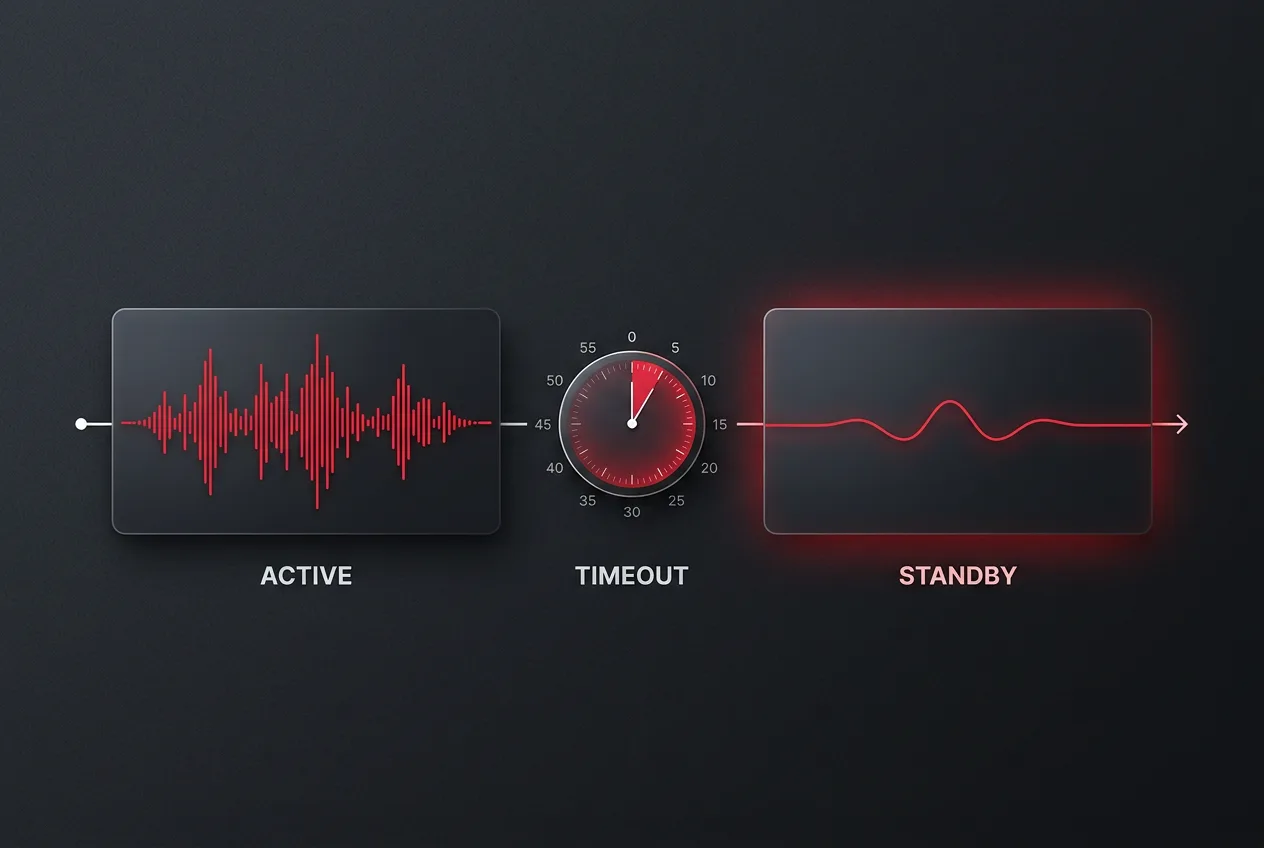
Standby mode does not apply to non-WebRTC connections. Organizations must review their concurrency limits before scaling sessions. The pricing structure aims to reduce costs during natural pauses in extended voice interactions without requiring developers to close and reopen sessions.
Documentation emphasizes immediate availability for developers who meet organization rate limits. No additional future updates were announced in the initial release materials. Monitoring for expanded voice and language support remains advisable as usage data accumulates.
Frequently asked questions
When did OpenAI release GPT-Live-1.1 to the Live API?
The model became available through the v1/live/sessions endpoint on or around November 19-20, 2026, after earlier rollout to ChatGPT subscribers.
How does standby mode pricing work for GPT-Live-1.1?
Developers configure an idle timeout of 5-60 seconds; after silence, inference pauses at $0.02 per minute while the WebRTC connection remains open and resumes on speech at $0.05 per minute.
What new capabilities does GPT-Live-1.1 provide over GPT-Live-1?
It adds full-duplex listening during speech, improved transcription and accent consistency, better instruction following, and reliable delegation of reasoning tasks to backend models without breaking conversation flow.
Which connection types support standby pricing?
Standby mode applies only to WebRTC connections; WebSocket sessions do not receive the reduced rate.
Comments
No comments yet. Be the first!