News VPN
Surfshark Public DNS Shutdown Set for November 24, 2026
Surfshark retires its standalone public DNS service after 19 months due to limited adoption, redirecting resources to core VPN infrastructure.

Surfshark will end its free public DNS service on November 24, 2026. The company announced the retirement on November 20 through its support documentation and subsequent media coverage. The service had operated for roughly 19 months since its launch in late April 2025.
Reasons for the Surfshark Public DNS Shutdown
Surfshark stated that the standalone DNS offering reached only a small number of users. The provider chose to reallocate engineering resources toward its primary VPN network, including expansion of server locations and improvements to connection speeds and stability. Company materials noted that concentrating efforts on features used by the majority of subscribers yields greater overall benefit than maintaining a lightly adopted auxiliary service.
The decision aligns with a broader pattern among privacy-focused VPN operators. Mullvad VPN discontinued its public encrypted DNS servers earlier in 2026 for comparable reasons of low uptake. Surfshark’s move follows the same logic of streamlining product focus rather than sustaining low-volume offerings.
Technical specifications of the retiring service included support for both plaintext and encrypted query methods. IPv4 addresses resolved to 194.169.169.169, IPv6 to 2a09:a707:169::, and DNS-over-HTTPS endpoints pointed to https://dns.surfsharkdns.com/dns-query. The service maintained a no-logs policy throughout its operation, though it never required a Surfshark subscription.
Impact on Users and Migration Options
Current Surfshark VPN subscribers experience no disruption. DNS traffic for active VPN connections continues to route through the encrypted tunnel by default. Recent independent audits, including one conducted by KPMG, confirmed the provider’s no-logs claims for its core VPN product.
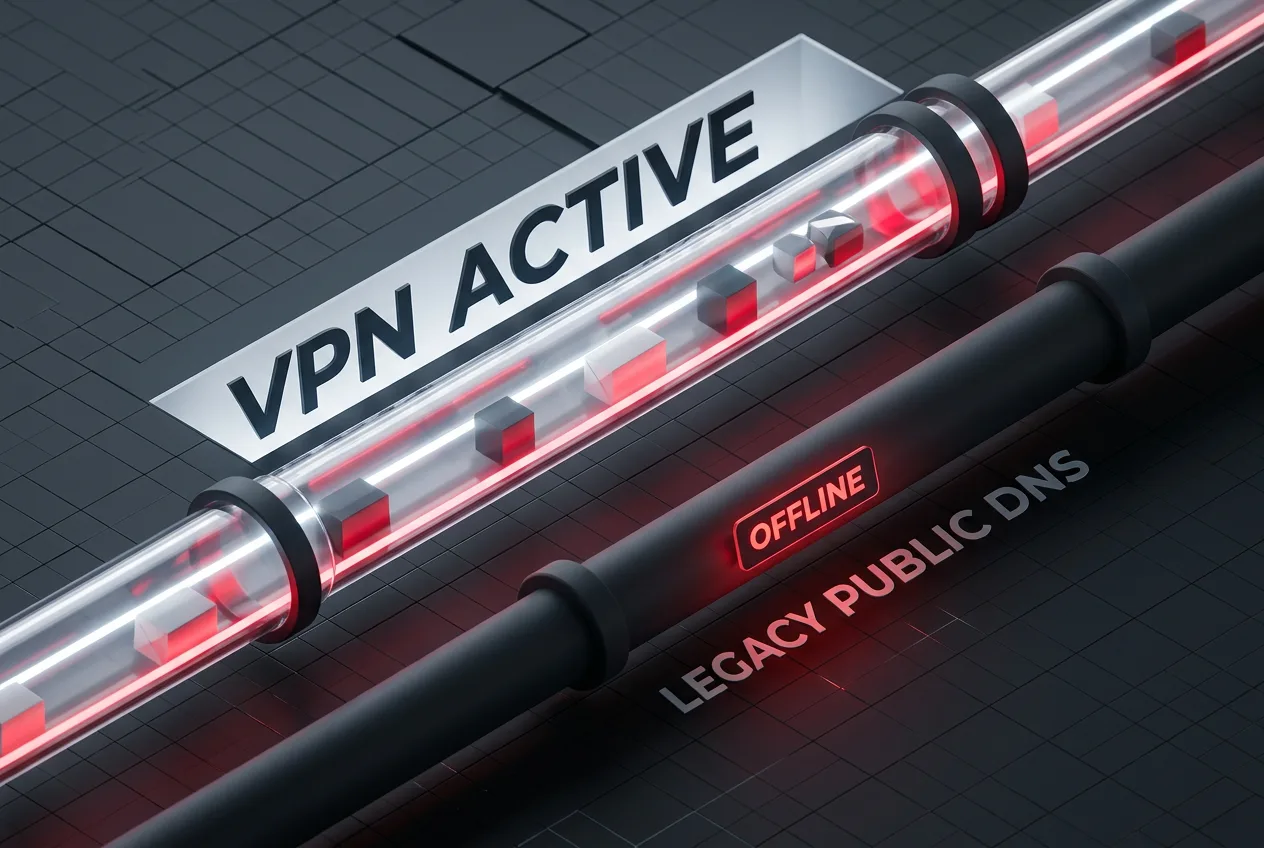
Non-subscribers and anyone who manually configured Surfshark DNS servers on routers, firewalls, or individual devices must update their settings before November 24. Failure to do so will result in loss of name resolution and inability to reach most websites. The company’s support documentation recommends switching to established public resolvers such as Google Public DNS, Cloudflare 1.1.1.1, or privacy-oriented alternatives like Quad9.
Administrators managing large numbers of devices should audit configurations now to avoid last-minute outages. Router-level changes typically require only updating the primary and secondary DNS fields, while enterprise environments may need to propagate changes through DHCP scopes or group policy objects. No replacement public DNS offering from Surfshark is planned at this time.
Frequently asked questions
When exactly does the Surfshark public DNS service stop working?
The service terminates on November 24, 2026. Any device still pointing to Surfshark DNS servers after that date will lose name resolution.
Will Surfshark VPN subscribers lose DNS protection after the shutdown?
No. Paying subscribers continue to use DNS through the encrypted VPN tunnel without any change to their experience.
What are the current Surfshark DNS server addresses?
The retiring addresses are IPv4 194.169.169.169, IPv6 2a09:a707:169::, and DoH endpoint https://dns.surfsharkdns.com/dns-query.
Which public DNS providers should replace Surfshark?
Recommended alternatives include Google Public DNS, Cloudflare, and Quad9. Each offers both plaintext and encrypted query options.
Comments 1