News Cryptocurrency
Fluidkey Hack Leads to $1.6 Million Loss Through SigNoz Logging Vulnerability
On 19 November 2026, attackers exploited unpatched flaws in Fluidkey’s SigNoz tool to steal session tokens and drain $1.6 million from 52 accounts across multiple chains.

Attackers drained approximately $1.6 million from 52 Fluidkey accounts on 19 November 2026 between 17:28 and 18:05 UTC. The theft targeted wallets on Ethereum, Base, BNB Chain, Polygon, Optimism, and Arbitrum after intruders accessed internal logs stored in an unpatched version of the SigNoz logging tool.
Attack Vector and Technical Details of the Fluidkey Hack
The intrusion began with two known vulnerabilities in SigNoz version 0.121.1, identified as GHSA-v549-7j2x-qjm5 and GHSA-w5pf-xwjh-vr5v. Attackers first gained access to logs that contained active user session tokens collected between roughly 12 and 19 November. Probes into the system had been observed as early as 5 November.
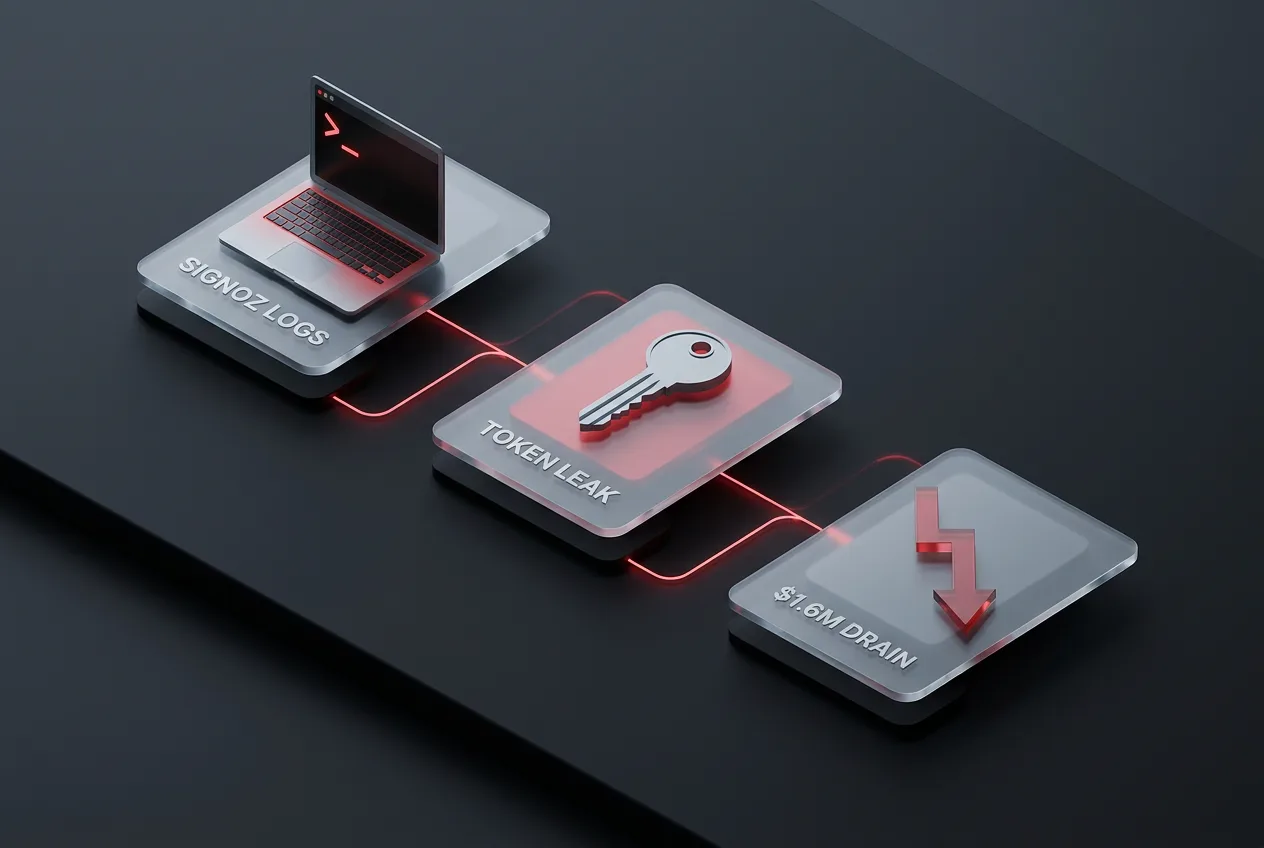
With the stolen tokens, the attackers created pre-approved transfer requests on Fluidkey’s servers and raised 2FA spending limits on the affected accounts. They then sent small trigger payments. When users opened or unlocked the app, the malicious transfers executed automatically. Private keys stayed on user devices and were never exposed. The same logs also revealed viewing keys for 54 additional accounts, though these provided only read-only access.
Independent blockchain data from Bitquery confirmed at least $1.58 million moved to wallets linked to the attackers, while separate tracking placed the total near $1.63 million. Most of the funds were swapped to ETH, after which 881 to 887 ETH were deposited into a mixer on the evening of 19 November. Personal data for 70 accounts was also exposed, including 38 email addresses, 37 names, 17 IBANs, and 24 physical addresses.
Fluidkey Response and Immediate Security Changes
Fluidkey disabled transaction processing at 18:05 UTC on 19 November. The service returned online at 15:27 UTC the next day after the release of version 1.79.22. Older client versions were blocked from sending transactions until users updated. All active sessions were terminated, the SigNoz instance was upgraded to a patched release, and credentials were rotated. The query interface was made private, and servers now require authorization tied to user keys rather than session tokens alone. Logging of sensitive data has been discontinued.
Fluidkey contacted every affected user directly and filed reports with the FBI Internet Crime Complaint Center and the Swiss National Cyber Security Centre. Data-protection authorities received notifications as well. The company retained SEAL 911 and later zeroShadow to trace the funds. No amounts recovered or plans for reimbursement have been announced as of 22 November. A full post-mortem remains in preparation.
Fluidkey operates as a self-custodial privacy wallet that stores keys on user devices. The incident demonstrates that server-side components can still create exposure points even when private keys never leave the device. Investigators continue to follow on-chain movements, and additional law-enforcement coordination is planned.
Frequently asked questions
How did attackers obtain Fluidkey user session tokens?
Attackers exploited two unpatched vulnerabilities in the SigNoz logging tool version 0.121.1. The flaws allowed access to internal logs that stored active session tokens collected over several days in November 2026.
Were private keys compromised during the Fluidkey hack?
No private keys left user devices. The attackers used stolen session tokens to create and pre-approve transfers on Fluidkey servers, then triggered execution when users opened the app.
What steps has Fluidkey taken since the November 19 incident?
Fluidkey disabled transfers immediately after detection, released version 1.79.22 the following day, terminated all sessions, updated SigNoz, and changed authorization requirements so transfers now need user-key approval instead of session tokens alone.
Has any of the stolen cryptocurrency been recovered?
As of 22 November 2026, Fluidkey has not reported any recoveries or freezes. The company continues working with investigators and law enforcement on tracing the funds.
Comments
No comments yet. Be the first!