News MiCA
Transak MiCA License Issued by Austrian FMA for Crypto Asset Exchange
Austria’s Financial Market Authority granted Transak GmbH a MiCA CASP authorization on 10 November 2026 covering fiat-to-crypto exchange services with passporting rights across the EEA.
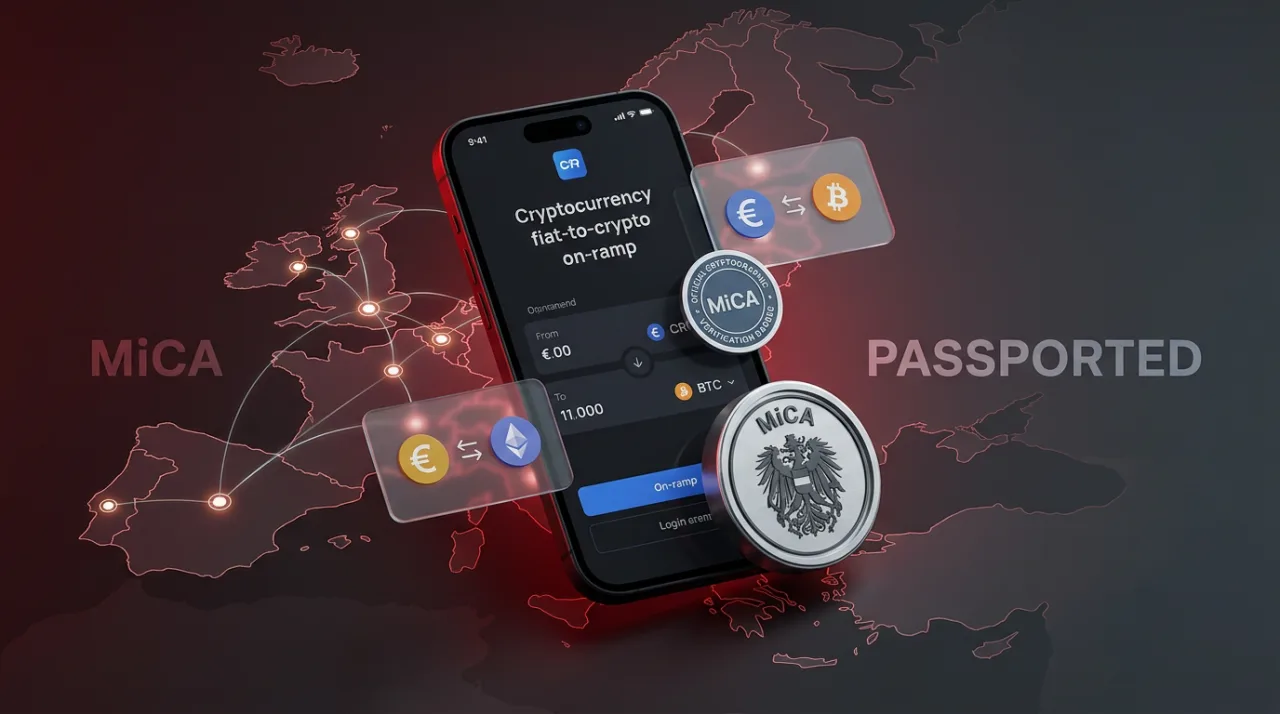
Austria’s Financial Market Authority authorized Transak GmbH as a Crypto-Asset Service Provider on 10 November 2026. The licence covers the exchange of crypto-assets for funds under Article 63 MiCAR and applies only to on-ramp and off-ramp operations.
The company, registered in Vienna, will operate as the EEA-regulated entity. Services begin on 26 November 2026 with support for cards, Apple Pay, Google Pay and SEPA transfers.
Scope of the Transak MiCA License and Passporting Rights
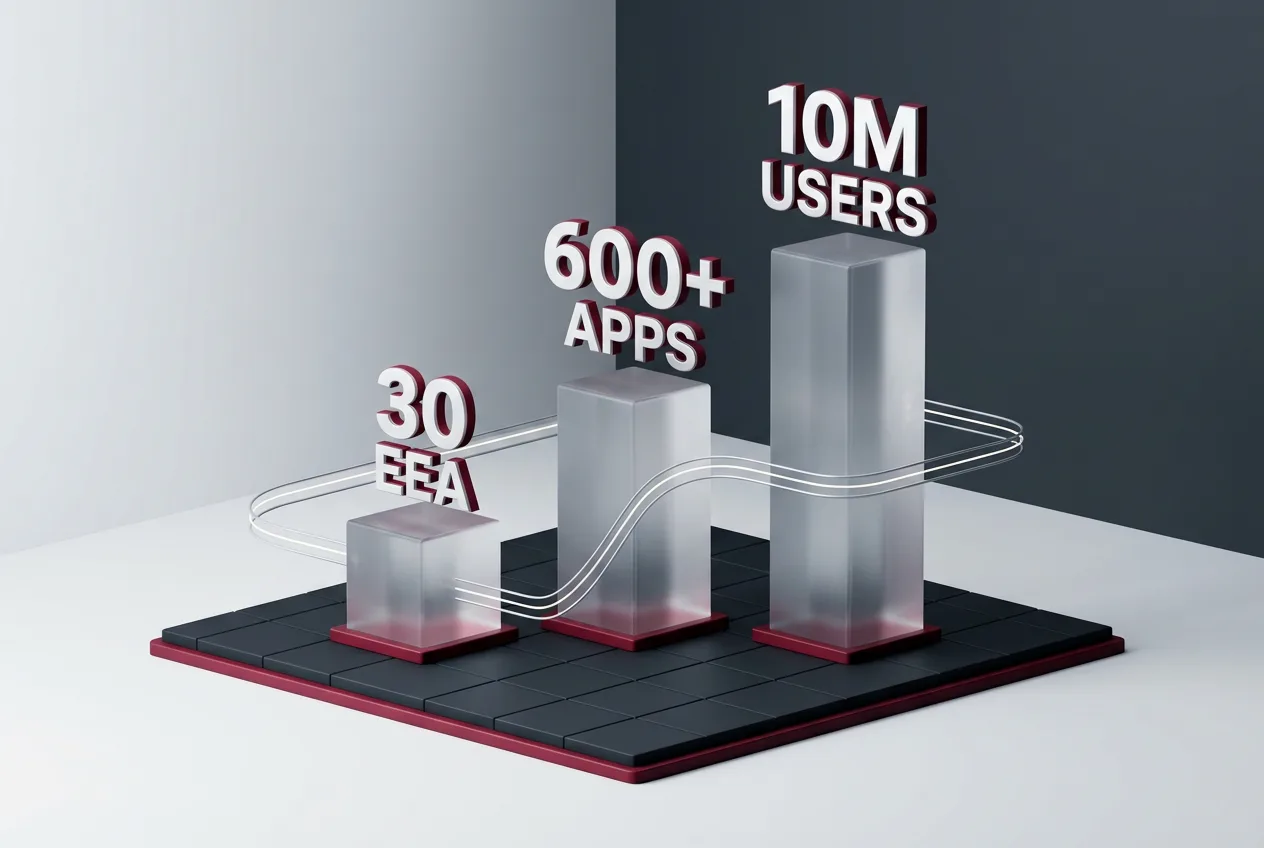
The authorisation permits Transak GmbH to provide crypto-to-fiat and fiat-to-crypto exchange services throughout the 30 EEA countries. Partners integrated with Transak’s Native Ramps API or widget can route EEA user flows through the Austrian entity without additional licensing steps.
The FMA published the decision on 11 November 2026. The licence appears in the ESMA interim MiCA register, bringing the total number of authorised Austrian CASPs to 13. Transak GmbH holds LEI 529900EEGMA1G5Y2DT85 and lists its address as Kärntner Ring 5-7/771, 1010 Vienna.
Initial payment methods include credit and debit cards, Apple Pay, Google Pay and SEPA bank transfers. The phased rollout allows gradual activation of additional corridors while partners complete required compliance updates.
Integration Impact and EEA Service Timeline
More than 600 applications already use Transak infrastructure and serve approximately 10 million users worldwide. EEA partners must now incorporate MiCA-specific disclaimers, consent flows and additional KYC data fields for users located in the region.
Transak previously held licences or registrations in the United States, United Kingdom, Canada and Australia. The new Austrian authorisation completes the regulatory framework needed for full EEA coverage under the MiCA transitional regime.
Service activation starts 26 November 2026. Partners receive documentation detailing the required changes to existing integrations and the timeline for testing MiCA-compliant endpoints.
Regulatory Context for Crypto On-Ramp Off-Ramp Providers
MiCA’s CASP regime entered full application after the transitional period. Austria’s FMA has issued several early authorisations, positioning the country as a home state for multiple licensed providers. The Transak licence demonstrates the regulator’s approach to evaluating exchange-only CASP applications.
Non-EEA group entities continue to handle activity outside the passporting area. Users in the EEA will route transactions exclusively through the Vienna-based company once the service launches.
Frequently asked questions
What services does the Transak MiCA license cover?
The licence authorises only the exchange of crypto-assets for funds, supporting fiat-to-crypto on-ramps and crypto-to-fiat off-ramps. It does not extend to custody, trading platforms or other CASP categories.
When will Transak begin EEA services under the new authorisation?
Operations start on 26 November 2026 with a phased rollout. Initial methods include cards, Apple Pay, Google Pay and SEPA transfers.
How many countries receive passporting rights from the Austrian licence?
The authorisation covers all 30 EEA countries, allowing Transak GmbH to serve clients across the 27 EU member states plus Iceland, Liechtenstein and Norway.
What changes do existing partners need to make?
Partners must update integrations to include MiCA disclaimers, obtain additional user consents and collect extra KYC data for EEA users before routing traffic through the Austrian entity.
Comments
No comments yet. Be the first!