News Blockchain
NEAR Protocol issuance cut approved as House of Stake passes HSP-029
The House of Stake ratified HSP-029 on November 16, 2026, lowering the maximum annual NEAR token issuance cap from 2.5 percent to 1.6 percent.
NEAR Protocol’s House of Stake ratified proposal HSP-029 on November 16, 2026, cutting the network’s maximum annual token issuance cap from 2.5 percent to 1.6 percent. The vote closed November 2 with 99.96 percent approval from 3.29 million veNEAR and received no Security Council veto.
Details of the NEAR Protocol issuance cut
The reduction follows a linear 24-month ramp that begins one quarter after ratification, expected around February 2026. The cap will decline by roughly 3.75 basis points each month according to the formula cap(t) equals 2.5 percent minus 0.9 percent times the minimum of t and 24, divided by 24. This change applies each epoch while the existing 90/10 split of new issuance between stakers and the treasury stays in place.
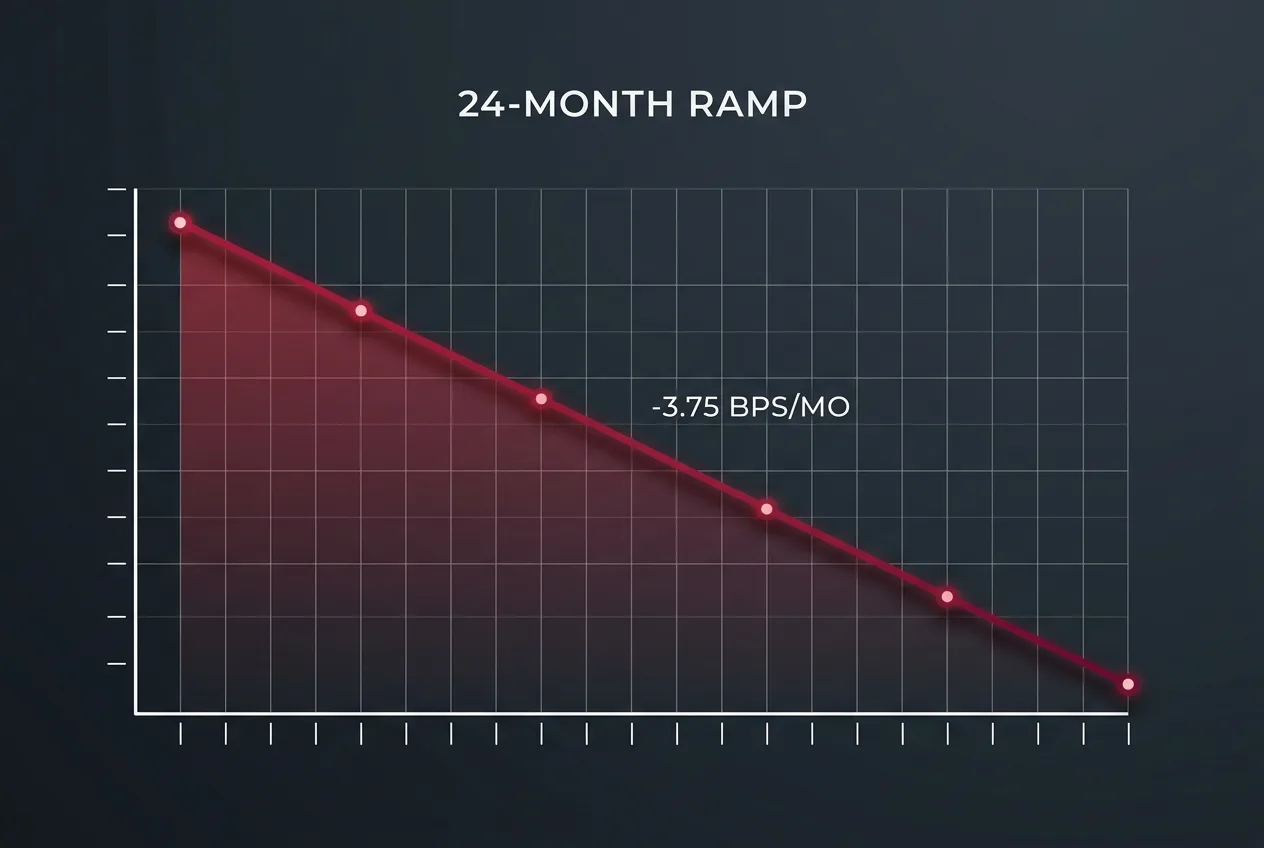
Modeling in the proposal assumes a constant staking ratio and projects 11.8 million fewer NEAR tokens issued over two years and 66.1 million fewer over six years. Daily issuance would fall from approximately 89,500 to 57,300 NEAR once the target rate is reached. Gross staking yield is modeled to drop from 5.27 percent to 3.37 percent at the target rate based on a 42.71 percent staking ratio snapshot from the vote period.
Validator commission revenue would decline by about 36 percent if staking participation and other conditions remain unchanged. The reduction is the second in just over a year; realized issuance stood at roughly 2.45 percent as of September 2026 after the prior cut from 5 percent to 2.5 percent in October 2025.
Background on House of Stake HSP-029 and token supply
Proposal HSP-029 was authored by SVRN CEO Sal Ternullo. It targets long-term dilution and sell pressure as the network moves past its initial bootstrapping phase. The change mirrors a comparable adjustment made earlier by the Solana network. As of late November 2026, the staking ratio sits between 45.6 percent and 46 percent, with roughly 596 million to 598 million NEAR tokens staked. The NEAR token trades near 2.9 to 3.0 dollars, giving a market capitalization of 3.8 billion to 4.0 billion dollars.
The proposal does not introduce a fixed supply cap or automatic adjustment mechanisms. It leaves future governance decisions open while providing quarterly transparency reports once the new cap is active. Current staking rewards continue to be paid from the existing issuance schedule until validators adopt the required protocol upgrade.
Implementation steps and staking yield impact
NEAR One will release the protocol upgrade package in the coming weeks. Validators must then voluntarily adopt the upgrade for the ramp to begin. No automatic enforcement exists, so participation levels will determine the exact start date of the monthly reductions.
Once active, the lower issuance rate will directly reduce daily token creation and therefore lower staking yields for participants who maintain the current staking ratio. Treasury inflows from the 10 percent share will also shrink proportionally. Observers expect continued monitoring through the planned quarterly reports to track actual supply growth against the modeled figures.
Frequently asked questions
When does the NEAR Protocol issuance cut take effect?
The 24-month linear ramp starts approximately one quarter after ratification, around February 2026, once validators adopt the protocol upgrade.
How much will staking yields change under HSP-029?
Modeled gross staking yield falls from 5.27 percent to 3.37 percent at the target issuance rate, assuming the staking ratio remains near 42.71 percent.
What happens to the treasury allocation after the cut?
The 90/10 split of new issuance between stakers and treasury remains unchanged, so treasury inflows shrink in line with the overall reduction.
Is there a fixed supply cap after HSP-029?
No fixed supply cap or automatic adjustment mechanism is included in the proposal.
Comments
No comments yet. Be the first!