News Gemini API
Gemini API Tool Retrieval Preview Enables Efficient Management of Large Tool Libraries
Google announced Tool Retrieval preview for the Gemini API on November 19, allowing agents to load tool schemas only when needed instead of sending full libraries with every request.
On November 19, 2026, Google introduced Tool Retrieval in preview within the Gemini API Interactions API (v1beta). The feature lets agents keep large collections of tools on standby and load full parameter schemas only when the model needs them, cutting input token counts and latency.
How Gemini API Tool Retrieval Works
Developers add a dedicated tool_search tool to each request and set defer_loading to true on function tools or mcp_server tools. The model receives only the name and description of each tool at the start. When it identifies the right tool, it issues a tool_search_call. The API responds with the full schema in a tool_search_result, after which the model emits the actual function_call. All steps occur inside a single request and appear in the interaction.steps log for inspection.
The server-side flow is the default. Remote MCP servers can be deferred entirely. A client-side execution mode is also available for custom registries or permission filters, though it adds one extra round-trip. The feature works with Gemini 3.6 and later models, including all Gemini 4 variants, but is limited to the Interactions API.
No new billing line item exists. Standard input and output token pricing applies. The tool_search step adds a small fixed token block, while loaded schemas count toward conversation input. Savings appear mainly with libraries of dozens or hundreds of tools.
Context and Comparison With Earlier Tool-Search Methods
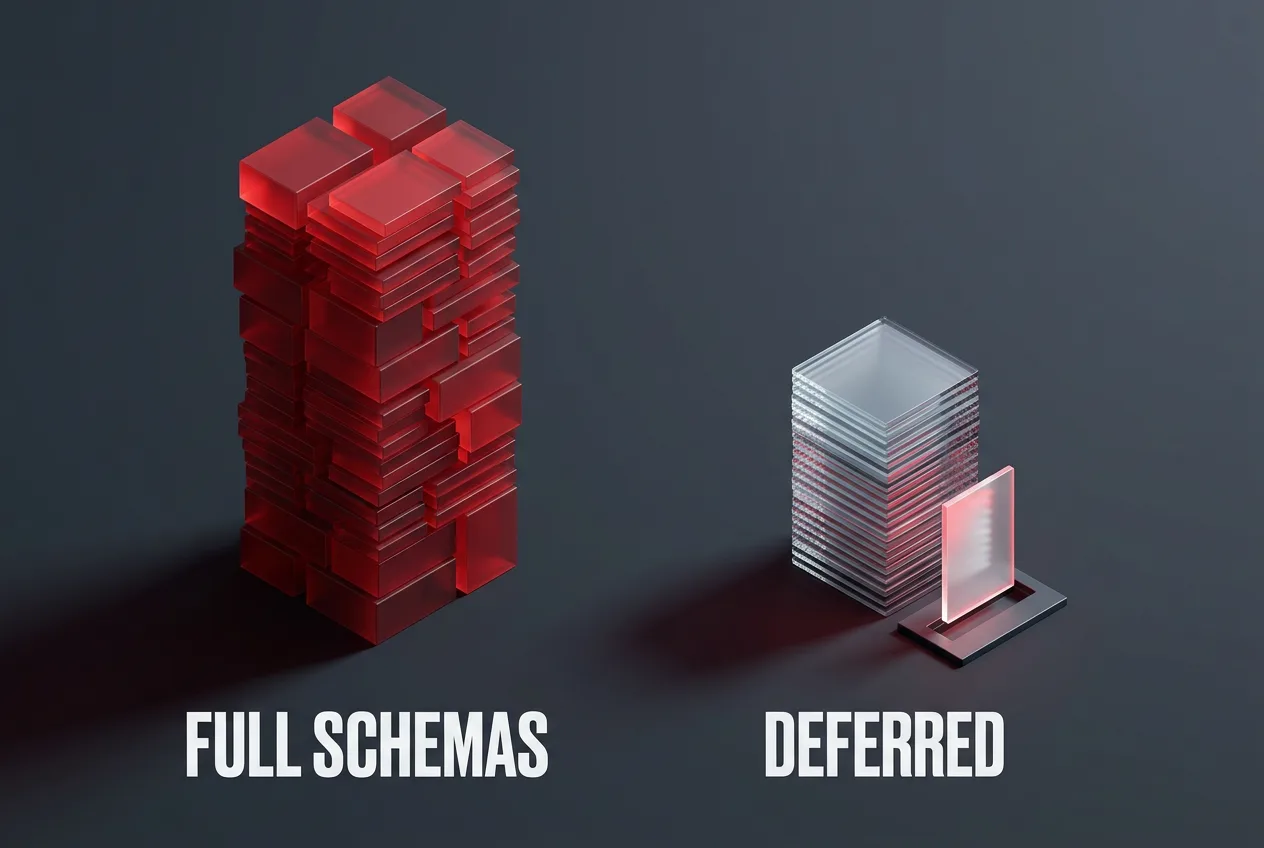
Token bloat and reduced selection accuracy have long limited agents that carry many tools. Earlier Gemini releases required every schema in the initial prompt, increasing costs and sometimes degrading prefix caching. Tool Retrieval addresses these issues by keeping deferred schemas out of the first message.
Similar defer_loading and tool-search capabilities appeared from Anthropic in late 2025 and OpenAI in early 2026. Google’s implementation adds explicit logging of each retrieval step and supports both server-managed and client-managed registries. The preview remains subject to change; Google has not announced a general-availability date.
Documentation and code samples sit at aistudio.google.com/docs/tool-retrieval. Teams running large tool sets can measure token reductions on their own traffic before deciding to adopt the new pattern.
Frequently asked questions
What models support Gemini API Tool Retrieval?
The preview works with Gemini 3.6 and all Gemini 4 models through the Interactions API. It is not available in generateContent calls.
Does Gemini API Tool Retrieval cost extra?
No additional fee applies. Standard token pricing covers the tool_search step and any loaded schemas.
How does defer_loading change prompt size?
Only tool names and descriptions travel in the initial request. Full schemas load later, reducing tokens for large libraries.
Can developers run Tool Retrieval on the client side?
Yes. Setting execution to client allows custom indexing or permission checks, though it requires one extra round-trip.
Comments
No comments yet. Be the first!