News DeFi
Kava Lend Exploit Drains 55 Million KAVA Tokens Through Dormant BUSD Market Flaw
An attacker drained 55.2 million KAVA tokens from Kava Lend on November 14, 2026, by exploiting an arithmetic flaw in a dormant BUSD market on the Kava blockchain.

On November 14, 2026, an attacker drained approximately 55.2 million KAVA tokens from Kava Lend, the native lending protocol on the Kava blockchain. The tokens were valued at roughly $3.76 million at the pre-attack price of about $0.068 each. The incident occurred late Friday Eastern Time through an arithmetic flaw in the protocol's interest-index calculation that targeted a nearly dormant BUSD market inactive since 2023.
Kava Lend Exploit Mechanics and Execution
The flaw allowed the attacker to reduce net supply in the BUSD market to an extremely small positive value of about two hundred-millionths of a dollar. This action inflated the supply index by roughly 243,000 times within three minutes and permitted the attacker to record a prior BUSD deposit as $1.25 to $1.26 billion in fictitious collateral. Two linked wallets executed 127 KAVA borrowing transactions over 98 minutes while bypassing the per-market borrowing cap through liquidations on a helper account. The Lend module account balance fell from 55.33 million KAVA to 0.19 KAVA.
On-chain records show the attacker tested the BUSD market repeatedly starting November 8. Nearly 99.8 percent of the drained KAVA came from the protocol's community and treasury module rather than retail deposits. Approximately 49.2 million KAVA was bridged to BNB Chain via LayerZero, after which 48.4 million tokens were sold for about $2.09 million in BNB and USDT. Roughly 612,000 USDT remained blocked at the Relay bridge.
Market Reaction and Protocol Response
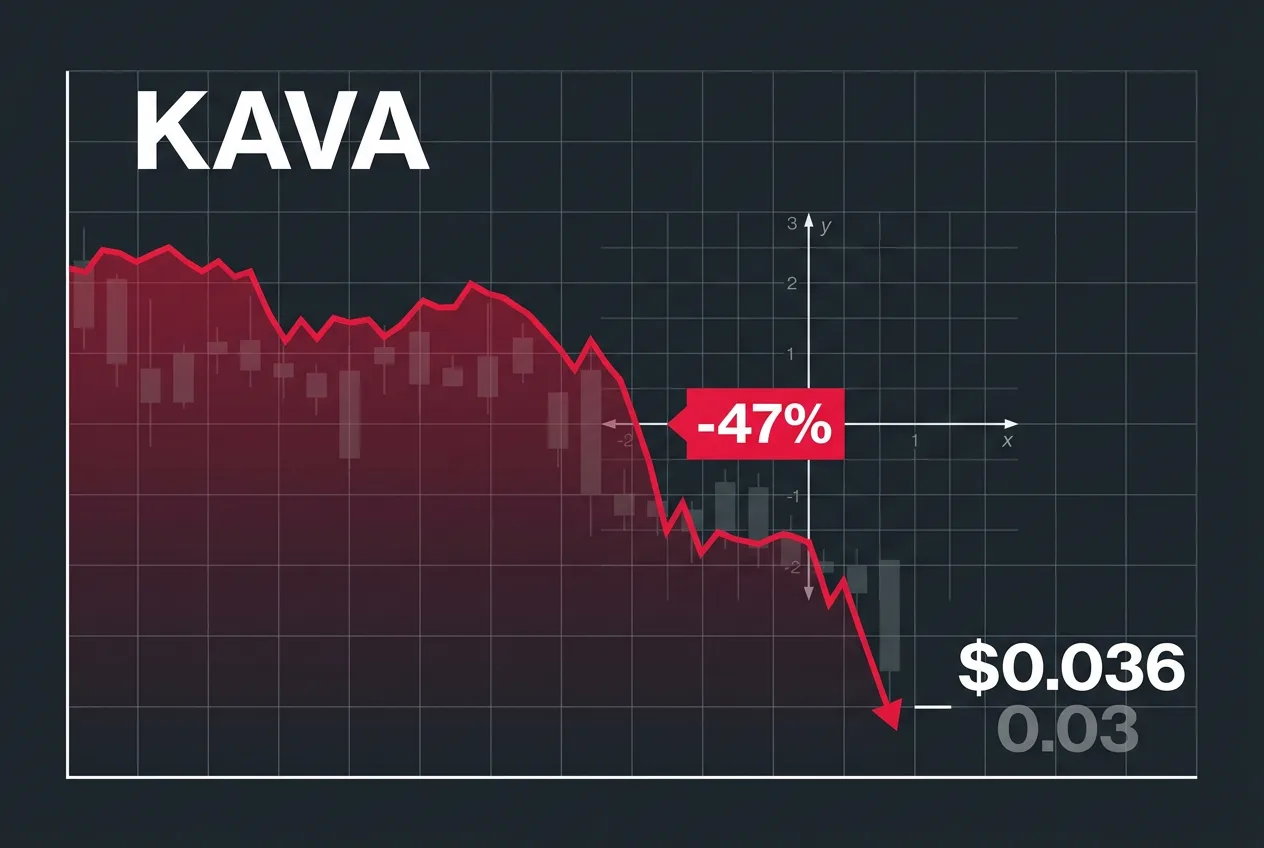
The KAVA token price dropped between 39 and 47 percent within 24 hours and traded near $0.036 to $0.042 after the incident. Kava stated that the event was not an infinite mint and remained isolated within Kava Lend. The team paused the Axelar bridge as a precaution, although the attacker used LayerZero. Several partner exchanges, including Upbit, Bithumb, and Coinone, suspended KAVA deposits and withdrawals.
Kava indicated it would publish a complete incident report once ready. As of November 15, no full post-mortem, official loss figure, or compensation plan had been released. A protocol update and fix are expected in the coming days. The episode highlights ongoing risks in DeFi security when legacy markets lack updated safeguards against edge-case arithmetic conditions.
Context for DeFi Security and Blockchain Exploit Patterns
Similar arithmetic vulnerabilities have appeared in other lending protocols when dormant assets retain active code paths. The Kava Lend exploit demonstrates how small positive balances can bypass zero-check logic and produce outsized index changes. Developers and auditors typically review such conditions during initial audits, yet older markets can remain exposed after years of inactivity.
Users holding KAVA or interacting with Kava Lend should monitor official channels for the forthcoming report. Exchanges continue to adjust trading parameters while the protocol team prepares remediation steps. The event adds to the documented cases of blockchain exploit activity in 2026 and reinforces the need for continuous monitoring of all active markets regardless of trading volume.
Frequently asked questions
What caused the Kava Lend exploit on November 14, 2026?
An arithmetic flaw in the interest-index calculation allowed an attacker to reduce net supply in a dormant BUSD market to a tiny positive value. This inflated the supply index and created fictitious collateral that enabled large KAVA withdrawals.
How much KAVA was taken in the Kava hack?
The attacker removed 55.2 million KAVA tokens, worth about $3.76 million at the time of the attack. Most of the funds originated from the protocol's community and treasury module.
What happened to the stolen KAVA tokens after the blockchain exploit?
Approximately 49.2 million KAVA were bridged to BNB Chain via LayerZero. Of that amount, 48.4 million tokens were sold for roughly $2.09 million in BNB and USDT, with some proceeds later blocked at a bridge.
How did Kava respond to the Kava Lend exploit?
Kava paused the Axelar bridge, noted that exchanges suspended deposits and withdrawals, and stated it would release a full incident report. No compensation details or final loss figures were available as of November 15.
Comments 2