News NEAR Protocol
NEAR Protocol Token Issuance Cut Approved by Governance to 1.6% Over 24 Months
NEAR Protocol governance approved a reduction in maximum annual token issuance from 2.5% to 1.6% over 24 months through proposal HSP-029.
NEAR Protocol governance approved proposal HSP-029 on November 2, 2026, cutting the network’s maximum annual token issuance rate from 2.5% to 1.6% over 24 months. The vote closed around 16:48 UTC with 99.96% support from participating veNEAR holders.
Details of the HSP-029 Proposal
The measure lowers the issuance ceiling linearly across 24 months, with an average decline of 3.75 basis points per month. It leaves the existing 90/10 allocation of new tokens unchanged, directing 90% to staking participants and 10% to the protocol treasury. The emissions schedule itself remains the same.
Modeling based on the September 2026 staking snapshot projects 11.8 million fewer NEAR tokens issued in the first two years and 66.1 million fewer over six years. Daily issuance would drop from roughly 89,500 to 57,300 NEAR at the target rate. Gross staking yield is expected to fall from 5.27% to 3.37% if participation stays constant.
Quarterly reports will track actual issuance after the change takes effect. The adjustment addresses long-term dilution without altering how new tokens enter circulation.
Implementation Steps and Timeline
Following the vote, the House of Stake Security Council must review and ratify the proposal. A 90-day grace period then allows wallets, exchanges, and staking providers to update their systems. Validators will complete a separate protocol upgrade before the new cap becomes binding.
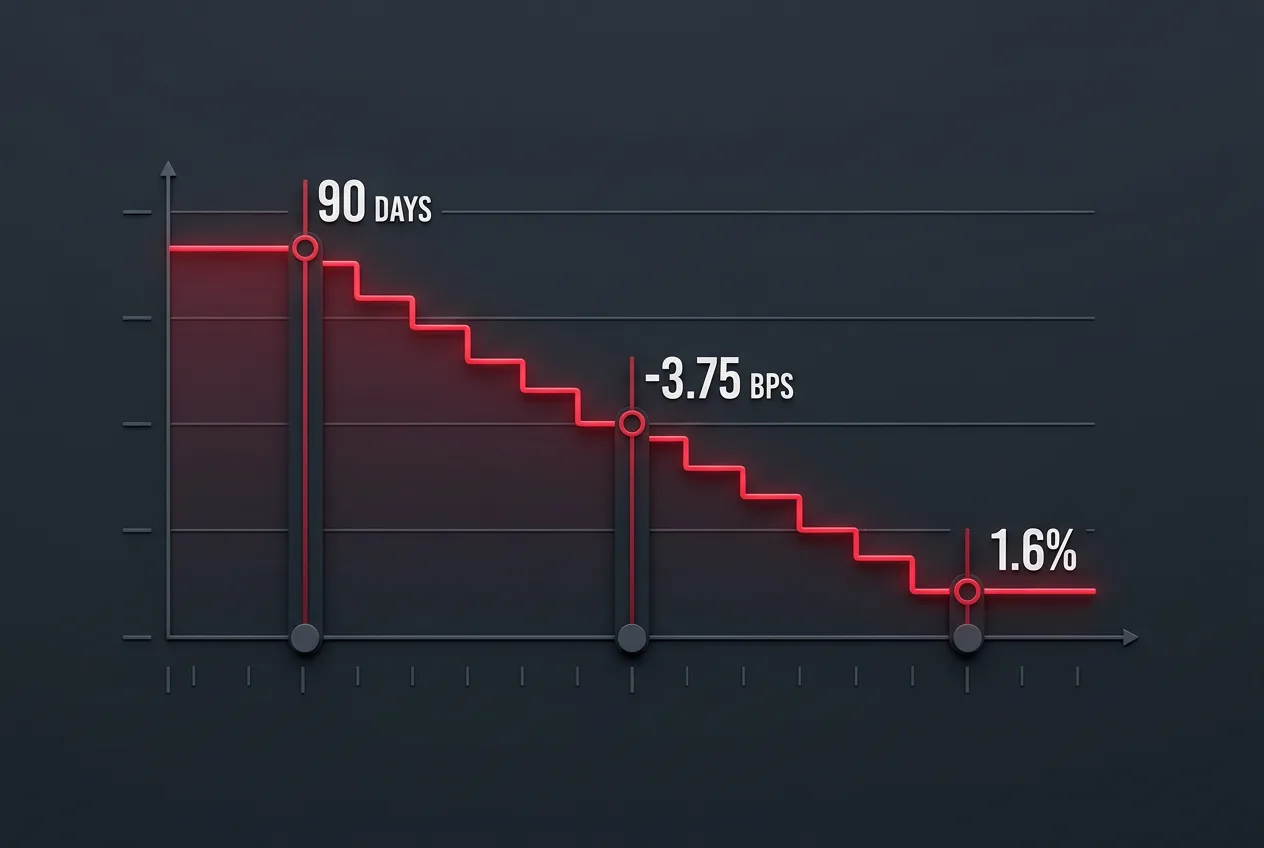
The change is not yet active. Once implemented, the ceiling declines gradually each epoch until it reaches 1.6% at month 24. This marks NEAR’s second issuance reduction in roughly one year after the prior cut from 5% to 2.5% that took effect in late October 2025.
As of November 4, 2026, NEAR traded between $4.00 and $4.13, with a market capitalization near $5.3–5.4 billion and a circulating supply of about 1.31 billion tokens. The move reduces future sell pressure as the network exits its initial bootstrapping phase.
Market Context and Staking Impact
Token issuance directly influences staking yields and overall supply growth in proof-of-stake networks. Lower caps can tighten the relationship between participation rates and rewards. Participants will monitor realized issuance through the quarterly reports to assess whether actual figures align with modeled outcomes.
The governance structure allows holders to adjust parameters as network conditions evolve. Previous adjustments demonstrate the mechanism’s ability to respond to changing economic conditions without disrupting core emission logic. Validators retain final control over activation through the required upgrade process.
Frequently asked questions
What does the NEAR Protocol token issuance cut change?
The approved proposal lowers the maximum annual issuance rate from 2.5% to 1.6% over 24 months while keeping the 90/10 split between stakers and treasury intact.
When will the NEAR issuance reduction take effect?
The change requires Security Council ratification, a 90-day grace period, and a validator protocol upgrade before it becomes binding.
How will the cut affect NEAR staking yields?
Projected gross staking yield falls from 5.27% to 3.37% once the 1.6% cap is reached, assuming participation levels remain unchanged.
How many fewer tokens will NEAR issue under the new cap?
The adjustment projects 11.8 million fewer NEAR over the first two years and 66.1 million fewer over six years compared with the prior schedule.
Comments 4