News Oracle
Google TPUs on Oracle Cloud Infrastructure Set for 2027 Availability
Oracle and Google announced a multi-year partnership to bring Google Tensor Processing Units to Oracle Cloud Infrastructure starting in 2027.
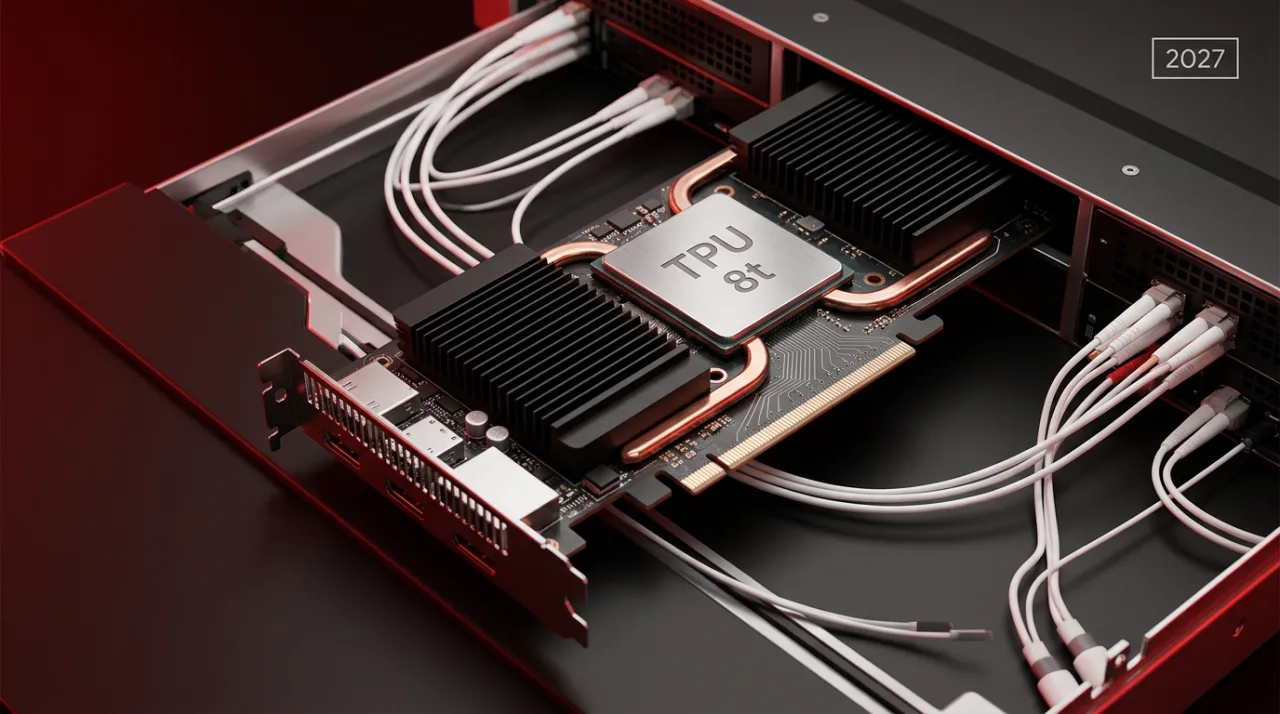
Oracle and Google announced on October 27, 2026, that Google Tensor Processing Units will become available on Oracle Cloud Infrastructure beginning in 2027. The announcement took place at Oracle AI World in Las Vegas. OCI will be the first hyperscaler outside Google to host the chips.
The agreement covers multiple generations of TPUs and spans several years with multi-gigawatt scale. Oracle will add future TPU versions on the first day they launch. The chips will operate alongside Nvidia GPUs and other accelerators already offered in OCI.
Google TPUs on Oracle Cloud Infrastructure technical details
The initial offering includes the eighth-generation TPU 8t and TPU 8i variants. The TPU 8t delivers nearly three times the compute performance per pod compared with the prior generation, shortening frontier model training cycles from months to weeks. The TPU 8i targets inference and agent workloads. Each chip reaches up to 12.6 PFLOPS of native FP4 performance and up to twice the performance per watt of the previous generation.
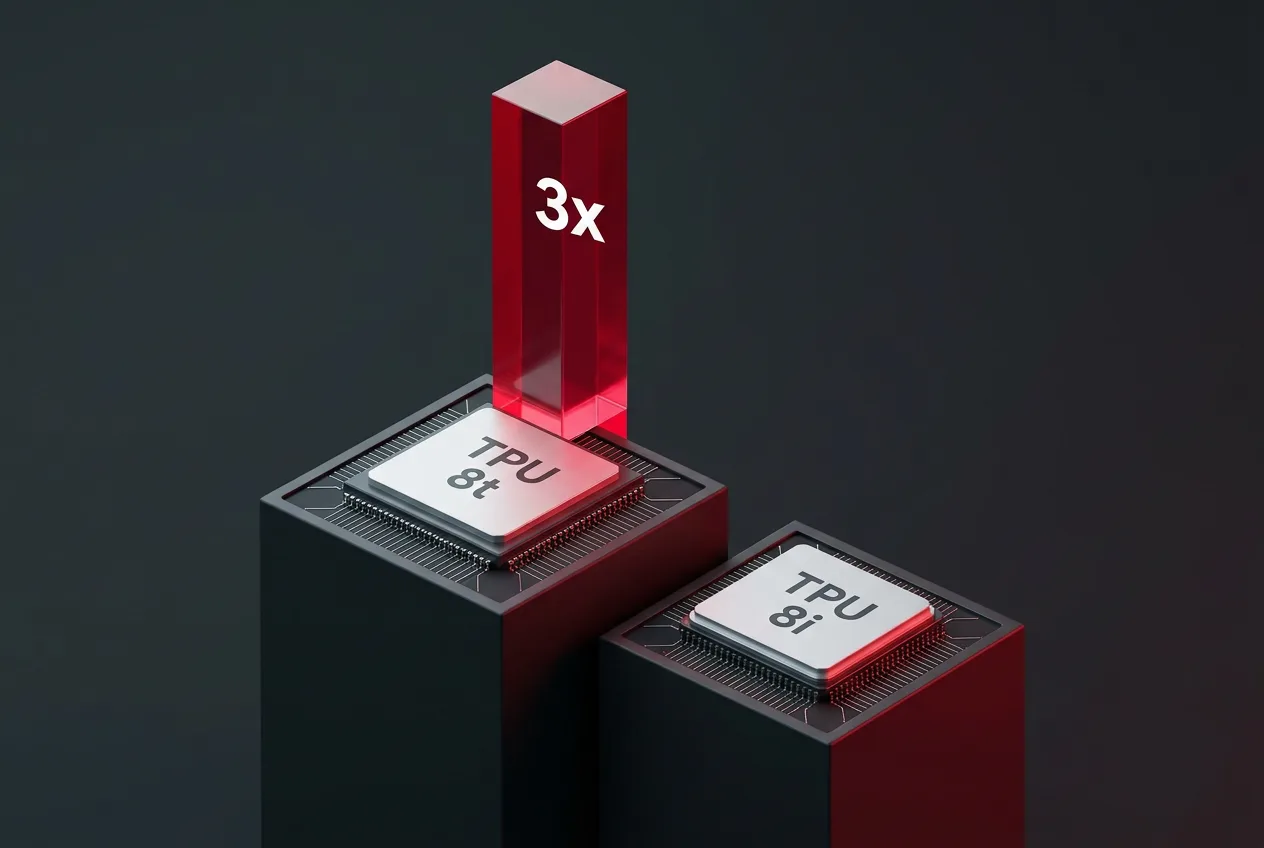
Oracle supplies power, liquid cooling at rack scale, and datacenter networking through its Acceleron platform, which includes SmartNIC, High Performance Fabric, and Zero Trust Packet Routing. Google TPUs retain their internal ICI and OCS interconnects for chip-to-chip communication. Customers can run training or inference workloads near Oracle databases and storage without moving data across clouds.
The setup supports dense and mixture-of-experts models as well as reasoning and agentic AI applications. Workload flexibility increases because teams can match specific accelerators to training or inference requirements within the same OCI tenancy.
Multicloud AI infrastructure implications and rollout timeline
Oracle executives stated that different AI workloads require different compute architectures. The partnership supplies multiple leading options inside one cloud platform for performance, throughput, and cost optimization. Google noted that next-generation AI needs diverse compute resources and that expanded TPU access increases flexibility for customers.
Capacity will ramp over multiple years beginning in calendar year 2027. No specific customer names or revenue figures were released. The arrangement builds on Google’s more than ten years of TPU development and on OCI’s existing expansion of AI hardware choices.
Enterprise users gain the ability to run fine-tuning and inference jobs next to their existing Oracle data estates. This multicloud approach reduces data-transfer latency and cost while allowing organizations to select the most suitable accelerator for each task without changing cloud providers.
Frequently asked questions
When will Google TPUs become available on Oracle Cloud Infrastructure?
Google TPUs will be offered on OCI starting in calendar year 2027. Capacity will increase gradually over a multi-year period.
Which TPU generations will Oracle support?
The partnership covers current and future TPU generations, with new versions added on day one of their launch.
How does the partnership affect workload placement for customers?
Users can run AI training or inference jobs next to Oracle databases and storage inside OCI, avoiding cross-cloud data movement.
Will TPUs replace Nvidia GPUs in OCI?
No. Google TPUs will run alongside Nvidia GPUs and other accelerators already available in Oracle Cloud Infrastructure.
Comments
No comments yet. Be the first!