News Blockchain
LayerZero Zero Mainnet and ATLAS Trading Engine Launch Set for November 30
LayerZero will activate its Zero L1 blockchain and lzATLAS trading engine on November 30, 2026, following an October 20 announcement.

LayerZero announced on October 20, 2026, that its Zero mainnet and lzATLAS trading engine will launch together on November 30, 2026. The timeline follows the February 2026 unveiling of Zero and the August 2026 introduction of ATLAS, with the debut date adjusted to year-end.
LayerZero Zero Mainnet Technical Details and Performance Targets
Zero operates as a multi-core Layer-1 blockchain verified through zero-knowledge proofs. It includes dedicated zones for general-purpose EVM execution, privacy-focused payments, and trading. Each zone targets up to approximately 2 million transactions per second at low per-transaction costs. The ATLAS trading engine runs inside the dedicated trading zone.
Pre-mainnet benchmarks show ATLAS initially provisioned for roughly 200,000 transactions per second. Median latency reaches sub-millisecond levels, with 1.418 milliseconds at the 95th percentile and 2.641 milliseconds at the 99th percentile in tests that mirror public deployment conditions. Colocated setups are expected to achieve double-digit microsecond latency.
The network builds on LayerZero’s existing interoperability protocol, which has facilitated over $290 billion in cumulative cross-chain volume. Zero was developed with input from Citadel Securities, DTCC, ARK Invest, Intercontinental Exchange, and Google Cloud.
ATLAS Trading Engine Features and Integration Plans
lzATLAS functions as the first application deployed on Zero. It serves as a headless exchange that combines order matching, clearing, settlement, and risk management within a single infrastructure stack. The system supports continuous 24/7 market operation and instant settlement. The initial Open ATLAS configuration targets crypto-native and open markets.
More than a dozen trading venues are expected to integrate at launch, with further integrations planned before the end of 2026. Venues have been testing execution and settlement workflows. Institutions have also evaluated the infrastructure for potential use with U.S. equities and fixed-income instruments.
ATLAS was developed in collaboration with partners including Globe Markets. Venues continue pre-launch integration and performance testing. LayerZero stated it will release additional partner and performance data ahead of the November 30 date, which remains on schedule with no reported delays through mid-November 2026.
Fee Model and Tokenomics Structure
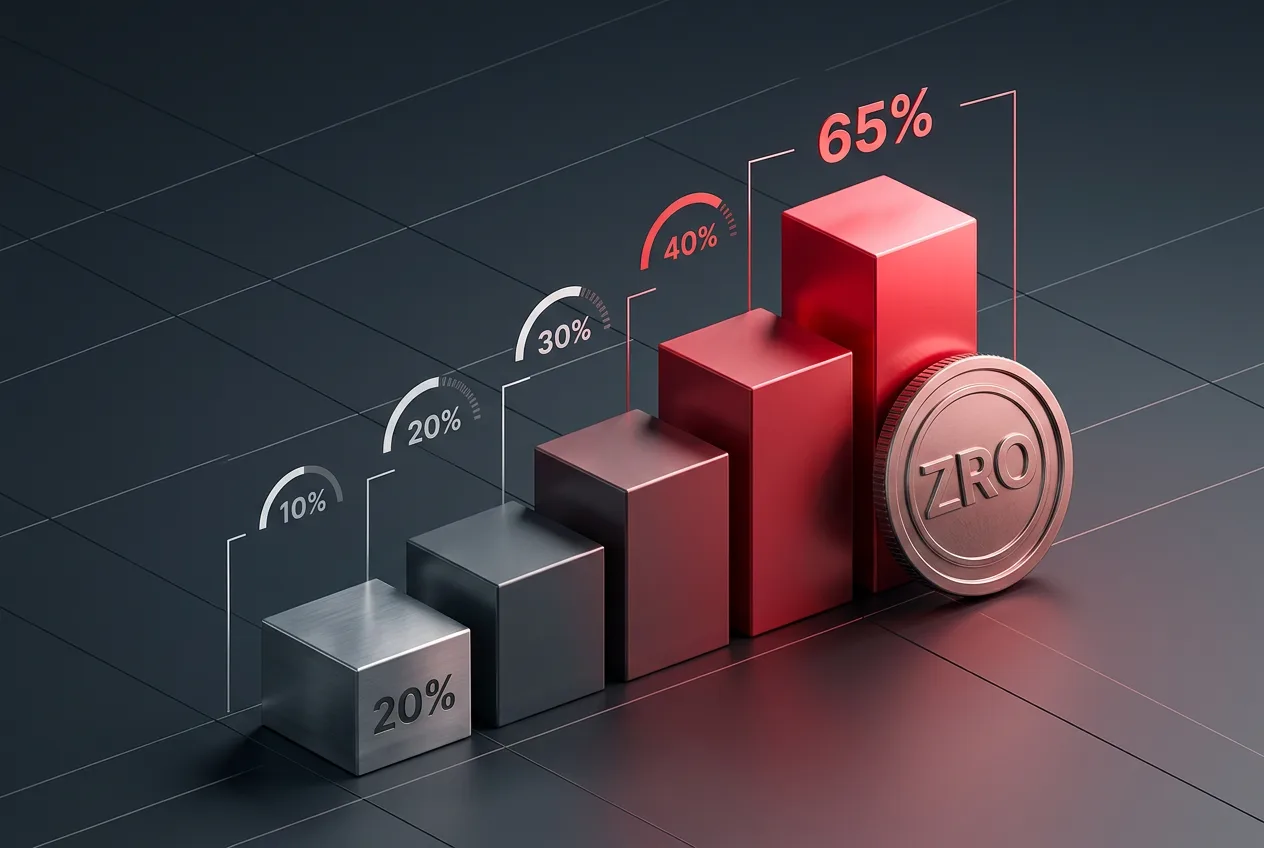
Trading venues receive fee rebates ranging from 20 to 65 percent, with higher rates available through ZRO token staking and volume commitments. Remaining fees are allocated with approximately 25 percent directed to market makers and 75 percent of post-rebate fees used for ZRO token buybacks and burns.
The launch sequence begins with the Open ATLAS configuration. Subsequent updates will expand supported market types and integration options. No consumer-facing frontend accompanies the initial release.
Frequently asked questions
When will LayerZero Zero mainnet go live?
LayerZero confirmed the Zero mainnet activation date as November 30, 2026, in an October 20 announcement. The launch coincides with the lzATLAS trading engine debut.
What performance benchmarks has ATLAS demonstrated?
Tests showed ATLAS handling around 200,000 transactions per second with median latency below one millisecond. The 95th percentile reached 1.418 ms and the 99th percentile reached 2.641 ms.
Which partners contributed to Zero and ATLAS development?
Zero involved Citadel Securities, DTCC, ARK Invest, Intercontinental Exchange, and Google Cloud. ATLAS development included Globe Markets among its collaborators.
How does the ATLAS fee model distribute revenue?
Venues receive 20 to 65 percent rebates, with higher shares tied to ZRO staking and volume. The remaining portion splits between market makers and ZRO buybacks and burns.
Comments 1