News Google Cloud
Google Multi-Party Compute Enters Private Preview for Institutional Crypto Custody
Google Cloud has placed its Multi-Party Compute platform into private preview for banks and financial institutions seeking distributed key management for digital assets.

Google Cloud made its Multi-Party Compute platform available in private preview on October 28, 2026, to selected design partners and major financial institutions. The service uses threshold multi-party computation to split signing keys across separate hardware-backed parties, including customer systems, Google Cloud, and third-party clouds.
The announcement occurred at the first Google Cloud digital assets and MPC symposium held in New York City. Representatives from Morgan Stanley, Citi, Wells Fargo, and OKX attended the event. Alphabet, Google’s parent company, is already running the system internally to secure its own Ethereum and Solana holdings.
Technical Features of Google Multi-Party Compute
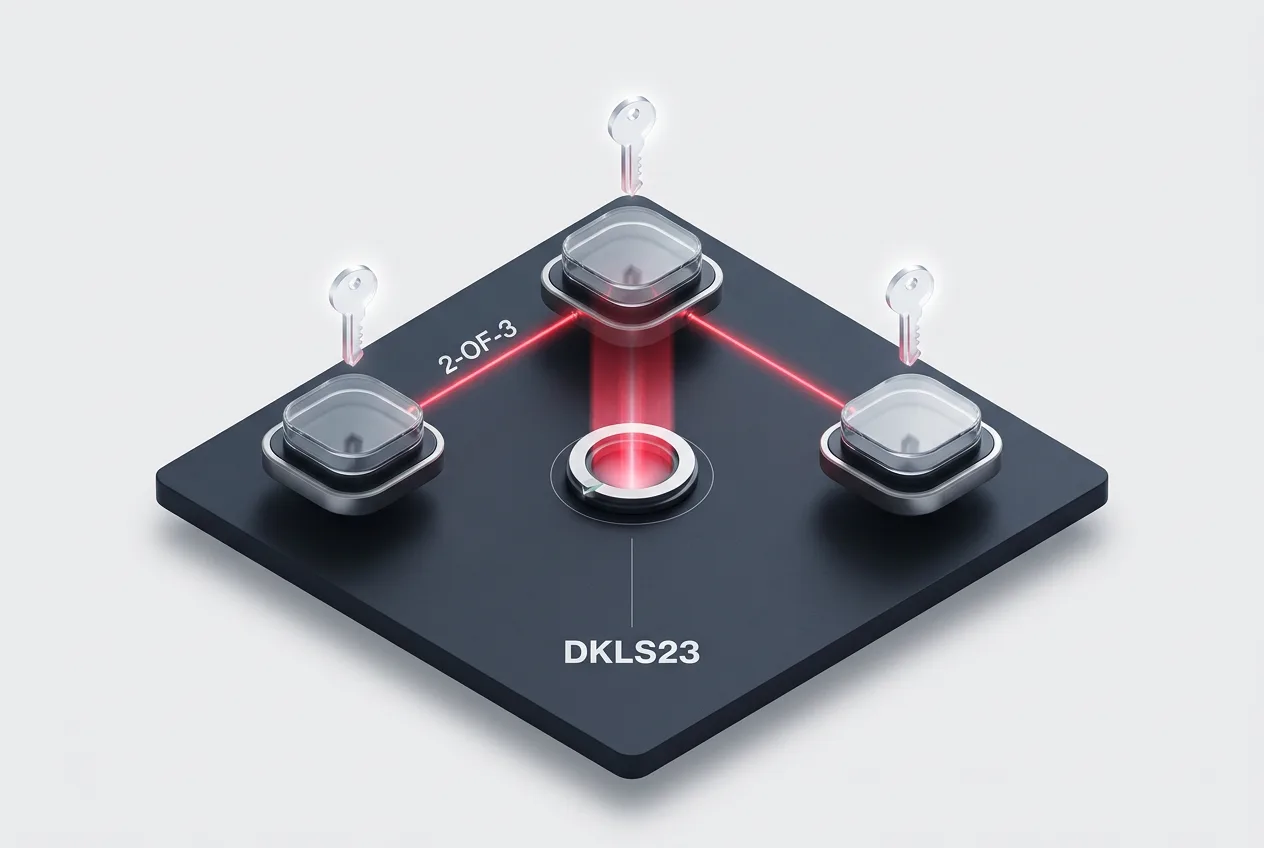
Google Multi-Party Compute supports threshold configurations such as 2-of-3 and 5-of-7. The hardened DKLS23 protocol extension ensures that no complete private key is ever assembled in a single location. An attacker who compromises fewer than the required number of parties cannot forge signatures or recover the key material.
A policy engine running inside Confidential Space checks each transaction against predefined rules before any signature is produced. These rules can enforce spending limits, restrict destinations, or require additional approvals. The current release handles ECDSA signatures on the secp256k1 curve for Bitcoin, Ethereum, and EVM-compatible chains. Support for EdDSA on Ed25519 for Solana is listed as coming soon and targeted for general availability.
Enterprise controls include isolated dedicated instances, role definitions for Admin, Policy Author, and Signer, and KeyRings that specify share holders, thresholds, and storage locations. Transaction policies are expressed as Cedar rules. Bitcoin-specific policy enhancements were added on October 1, 2026.
Market Context and Development Timeline
Google Multi-Party Compute addresses documented risks of private-key theft that have accounted for a significant share of crypto losses tracked by Chainalysis. The platform positions Google Cloud against established MPC custody providers such as Fireblocks and BitGo. It builds on earlier Confidential Space technology and incorporates institutional practices for key management that banks already apply to traditional assets.
Release notes show development activity dating back to at least August 2026, with documentation updated around October 27. Rich Widmann, director of digital assets strategy at Google Cloud, stated that regulated institutions adopting blockchains require scalable infrastructure that meets existing banking security standards. General availability remains scheduled for early 2027.
Next Steps for Institutions and Product Expansion
Broader commercial access is planned for early 2027, though specific pricing has not been disclosed. Google Cloud expects continued testing by design partners during the private preview period. Future updates may add further chains and algorithms, including post-quantum cryptography capabilities.
Financial institutions evaluating Google Multi-Party Compute can request participation through their Google Cloud account teams. The service is currently limited to unnamed design partners and selected banks already conducting internal tests.
Frequently asked questions
What is Google Multi-Party Compute?
Google Multi-Party Compute is a custody platform that splits signing keys across independent hardware-backed parties using threshold multi-party computation. It prevents any single party from holding a complete private key.
Which blockchains does Google Multi-Party Compute support?
The current private preview supports ECDSA on secp256k1 for Bitcoin, Ethereum, and EVM-compatible chains. EdDSA on Ed25519 for Solana is planned for general availability.
When will Google Multi-Party Compute reach general availability?
Google Cloud has targeted early 2027 for general availability after the private preview period that began in late October 2026.
How does the policy engine work in Google Multi-Party Compute?
The policy engine runs inside Confidential Space and evaluates each transaction against rules such as spending caps and approved destinations before any signature is issued.
Comments 1