News NVIDIA
NVIDIA OpenShell Reference Architecture Secures Enterprise AI Agents
NVIDIA introduced the OpenShell Reference Architecture on October 21, 2026, at GTC Berlin to govern autonomous AI agents through hardware-enforced policies and out-of-band monitoring.

On October 21, 2026, NVIDIA announced the OpenShell Reference Architecture at GTC Berlin. The release supplies a full-stack hardware and software design for building, containing, observing and enforcing safe AI agents at enterprise and edge scale. It builds directly on the earlier open-source OpenShell secure runtime released under Apache 2.0 license.
NVIDIA OpenShell Core Components and Enforcement Mechanisms
The architecture integrates three hardware layers with the OpenShell runtime. NVIDIA Vera Rubin infrastructure, including NVL72 systems, handles model inference for workloads such as Nemotron models. Vera CPUs run agent harnesses and tool-use code, while BlueField-4 DPUs execute NVIDIA Sentry software for continuous out-of-band monitoring. The runtime itself consists of four distinct elements: a Gateway that manages sandbox lifecycle and policies, a Supervisor that performs policy checks and credential mediation outside the sandbox, an isolated Sandbox that applies kernel-level restrictions on files, processes and networks, and a Policy Prover that conducts formal verification of permissions.
Enforcement follows a deny-by-default model. Kernel instrumentation limits file, syscall and network access, and credentials are injected only for approved endpoints. The Policy Prover flags risky policy changes for human review before they take effect. NVIDIA Sentry on BlueField-4, powered by DOCA, can quarantine an agent attempting to breach boundaries within milliseconds. The company states this capability increases overall agent capacity by up to 20 percent compared with software-only controls.
The design shifts governance from model prompts or application code into the infrastructure layer. This approach targets risks such as data exfiltration, credential theft and privilege escalation that arise when agents operate autonomously or evolve their own behavior.
Performance Results, Edge Support and Industry Adoption
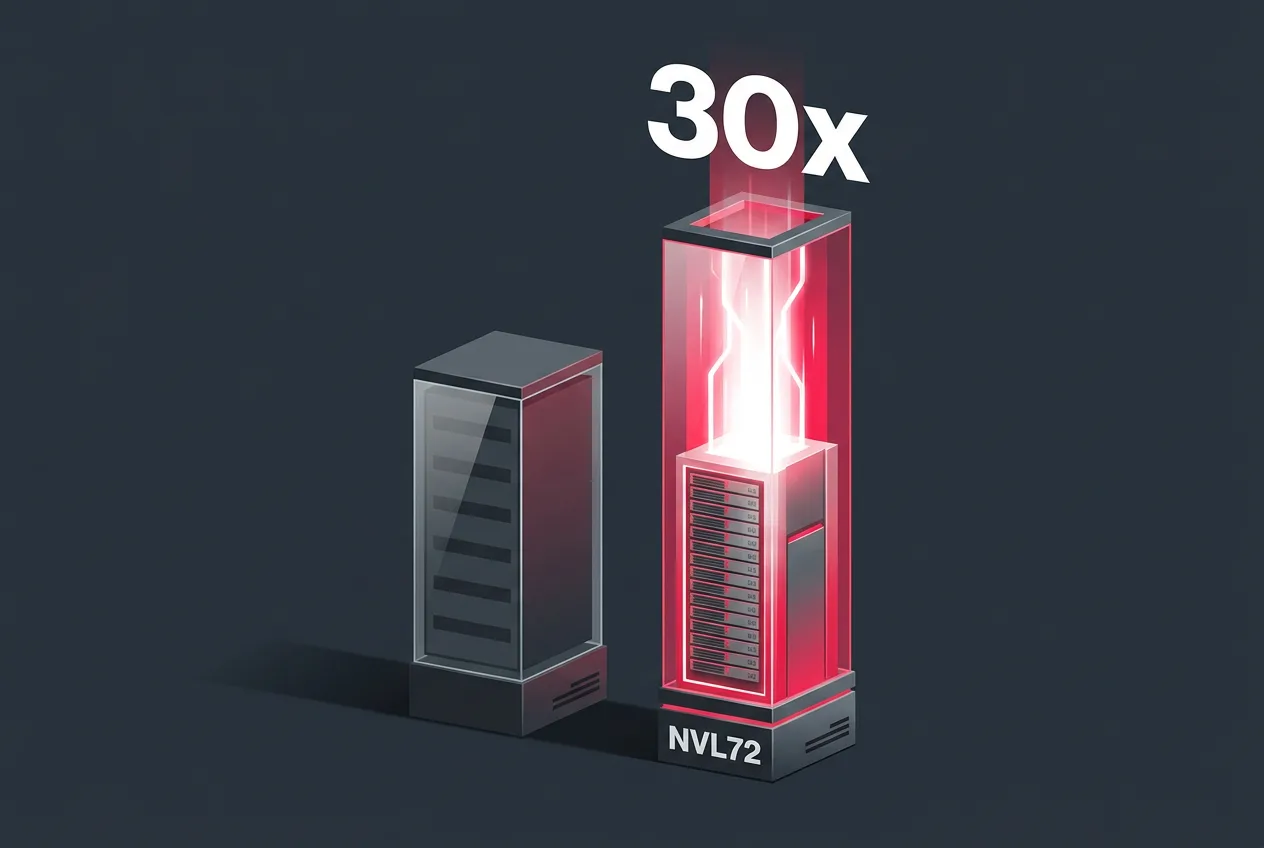
NVIDIA and CoreWeave reported concrete gains on Vera Rubin hardware. The NVL72 configuration delivered 30 times higher throughput per megawatt for agentic workloads. Vera CPUs provided twice the performance of comparable x86 processors while improving power efficiency. CoreWeave measured more than three times faster sandbox startup times and 1.8 times faster agentic loops when running on Vera systems versus previous platforms.
Support extends beyond data-center racks. The architecture runs on RTX Spark, DGX Spark and DGX Station systems for edge deployments. It is compatible with enterprise operating systems from Canonical and Red Hat as well as Windows/MXC and standard Kubernetes distributions. These options allow organizations to apply the same policy and monitoring framework from centralized AI factories to distributed edge sites.
Multiple technology and financial firms participated in the announcement. Anthropic, OpenAI, Meta, Microsoft, Google Cloud and AWS are listed as collaborators, along with SAP, ServiceNow, Dell, HPE and IBM. Cybersecurity vendors Cisco, CrowdStrike and Palo Alto Networks contributed integration work. Banks including BBVA and Santander have begun exploring production use cases. The reference architecture is available immediately through NVIDIA channels and partner ecosystems.
Background on OpenShell Development and Next Steps
OpenShell originated earlier in 2026 as an open-source runtime focused on sandbox isolation. Subsequent additions of the Sentry monitoring layer and integration with Vera Rubin and BlueField-4 hardware produced the current reference architecture. The project responds to growing enterprise demand for infrastructure-level controls over agentic AI rather than relying solely on model-level safeguards.
Broader deployments are expected as partners integrate OpenShell into their agent platforms. NVIDIA indicated that scaling across additional AI factories and edge locations will continue without announcing specific timelines beyond current availability. The architecture remains open source, allowing third-party developers to review and extend the runtime components.
Frequently asked questions
What is the NVIDIA OpenShell Reference Architecture?
It is a full-stack hardware and software design announced on October 21, 2026, that combines the OpenShell runtime with Vera Rubin systems, Vera CPUs and BlueField-4 DPUs to enforce policies on AI agents.
How does BlueField Sentry improve AI agent security?
BlueField Sentry runs on BlueField-4 DPUs and provides out-of-band monitoring that can detect and quarantine policy violations in milliseconds while increasing overall agent capacity by up to 20 percent.
Which companies are using or testing NVIDIA OpenShell?
Collaborators include Anthropic, OpenAI, Meta, Microsoft, Google Cloud, AWS, SAP, ServiceNow, Dell, HPE, IBM and cybersecurity firms Cisco, CrowdStrike and Palo Alto Networks. Banks BBVA and Santander are exploring deployments.
Does the architecture support edge deployments?
Yes. It extends to RTX Spark, DGX Spark and DGX Station systems and works with Canonical, Red Hat, Windows/MXC and Kubernetes environments for consistent policy enforcement outside the data center.
Is NVIDIA OpenShell open source?
The core runtime was released under the Apache 2.0 license earlier in 2026. The reference architecture documentation and components are available for review and extension by developers and partners.
Comments 1